



See Also

Detailed Programme |
 Print this page
Day 1
|
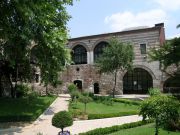
ARRIVAL IN ISTANBULProgramme Upon arrival at Istanbul Atatürk Airport you will be met by a representative of the travel agency at the arrival lounge, who will take you to your hotel for overnight in Istanbul. |
Day 2
|
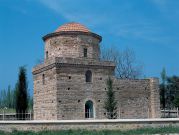
İZNIK / YENIŞEHIR / İNEGÖL / BURSAProgramme In the morning depart for İznik. Visit Nilüfer Hatun İmaret (İznik Museum), the Green Mosque, Süleyman Pasha Madrasa, İsmail Bey Hammam, Murat II Hammam, Kirkkizlar Türbe. In the afternoon visit Yenişehir to see Postinpuş Baba Zawiya. Continue to İnegöl to visit the İshak Pasha Complex and on to Bursa for dinner and overnight. Reference to Exhibition Trail: ITINERARIES V, VI |
Day 3
|
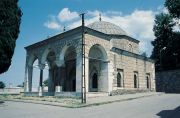
BURSAProgramme Osman Bey (son of the Turkmen lord Ertuğrul Bey) founded an emirate in 1299 under Orhan Bey’s command, annexing Brussa (Bursa), a Byzantine city, in 1326. Bursa became the first capital city of the Ottoman Empire. This itinerary includes a visit to 14th-15th century monuments built by the Ottoman sultans Orhan Bey, Murat I, Bayezit, Mehmet I and Murat II: Yeşil Madrasa (Museum of Turkish and Islamic Art), Yeşil Mosque, Yeşil Türbe (mausoleum), Yildirim Complex, Yildirim Madrasa, Yildirim Mosque, Türbe of Bayezid, Orhan Mosque, Koza Hanı, Great Mosque (Ulu Cami), Türbe of Osman Ghazi, Türbe of Orhan Ghazi, Muradiye Mosque, Muradiye Madrasa, Türbe of Murad II, Türbe of Şahzade Mustafa and Cem Sultan, Spas, Kükürtlü Kaplica and Eski Kaplica, Hüdavendigar Mosque. Dinner and overnight in Bursa. Reference to Exhibition Trail: ITINERARY IV |
Day 4
|
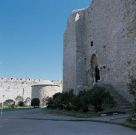
KARACABEY / ULUBAT / ÇANAKKALEProgramme Depart for Çanakkale, whose strategic position on the Turkish Straits led to conflicts between nations and over the centuries. Before the Ottoman conquest, Çanakkale was part of the Karasi Emirate, until the mid-14th century. En route visit Imaret Mosque at Karacabey, continue to Ulubat and visit Issız Han. Late afternoon arrive in Çanakkale and visit Sultaniye (Çimenlik) Fortress, built in 1463 by the Ottoman Sultan Mehmet II to secure his control over the Dardanelles. Dinner and overnight in Çanakkale. Reference to Exhibition Trail: ITINERARIES III.2, VI.3, VII.1 |
Day 5
|
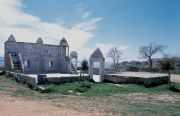
ECEABAT / GELIBOLU / ISTANBULProgramme Take the ferry to Eceabat and visit Kilitbahir (meaning “The lock of the sea”) Fortress, built by the Ottoman Sultan Mehmet II in 1463 to control the European shore in front of Çanakkale. Afterwards continue to Gelibolu (Gallipoli). At Gelibolu, visit Türbe of Ahmet Bican Efendi (Hallacı Mansur) and Azebler Namazgah (1407). Continue to Istanbul for overnight. Reference to Exhibition Trail: ITINERARY VII.1,2,3 |
Day 6
|
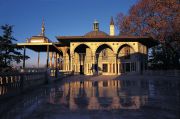
ISTANBULProgramme The last day includes a visit to some of the most significant monuments of Ottoman Istanbul: visit Ibrahim Pasha Palace (Turkish and Islamic Art Museum, closed on Mondays) built by Bayezit II in the 15th century on part of the remains of the Byzantine Hippodrome, Blue Mosque, St Sophia Museum (a Christian basilica originally constructed under Emperor Constantine in the 4th century AD) and Topkapi Palace (built by Mehmet II in the 15th century, with additions until the 19th century). Overnight in Istanbul. |
Day 7
|
DEPARTURE FROM ISTANBULProgramme On departure day you will be collected from the hotel by a representative of the travel agency, who will accompany you to Atatürk Airport and assist you until check-in. |
PAST & PRESENT OPTIONS
On request the visit to historical monuments and sites can be combined with features representing the country today:
Istanbul
Sirkeci Railway Station, Beyoglu and Taksim, the Metro and modern areas: Sisli, Levent and Maslak; a visit to a hospital where a talk by the tour guide and a member of the hospital’s staff will compare the healthcare system under the Ottoman Empire and during the period of the Turkish Republic. Visits to the Archaeological Museum, Pera Museum and Istanbul Modern Museum will reveal the indissoluble connection between old and modern culture.
Bursa
A visit to a car factory; a visit to a textile factory (in the 16th and 17th centuries textile production was widespread but mainly as a family business for the home market. Not until the 20th century did industrial production start on a major scale opening to foreign markets in the 1980s); a trip to Mt Uludag with its modern ski resorts; a visit to one of the olive oil factories of Anatolian Turkey.
Programme And Prices Are Subject To Change. © Museum With No Frontiers, 2009 – 2013